

Online Education Courses Millions of people learning!

Universities Canada celebrates Canadian science professor awarded Nobel Prize for foundational AI discoveries

On behalf of its members, Universities Canada would like to recognize Geoffrey Hinton, Professor Emeritus of computer science at the University of Toronto, who was awarded a Nobel Prize in Physics on October 8, together with John Hopfield, Professor Emeritus at Princeton University, for their foundational discoveries and inventions on neural networks that laid the groundwork for the AI revolution. The Nobel Prize is awarded to those whose discoveries provide the greatest benefit to humankind.

October 8’s recognition of a Canadian scholar underscores the importance of investing in fundamental research at Canadian universities to secure a healthy, prosperous and sustainable future for all. Universities Canada extends its congratulations to Geoffrey Hinton and John Hopfield for this distinguished recognition.

Hinton’s research group made significant breakthroughs in deep learning, using tools from physics to transform speech recognition and object classification. Using an associative memory system developed by co-laureate Hopfield, he devised a way to find and identify specific elements in data, including in pictures. His contributions advanced machine learning, which underpins technologies like ChatGPT and self-driving cars.


“I’m thrilled to learn that Canadian professor, Geoffrey Hinton, has been awarded a Nobel Prize for his significant contributions to artificial intelligence. This honour is well-deserved and serves as a reminder of the outstanding talent we have here in Canada. Groundbreaking research like this is taking place on university campuses across Canada, and it’s by investing in these bold, new ideas that we’ll solve the world’s greatest challenges and create a better future.”

– Gabriel Miller, President and CEO of Universities Canada.


Known as the godfather of AI, Hinton earned his PhD in Artificial Intelligence from the University of Edinburgh in 1978 and conducted postdoctoral research at Sussex University and UC San Diego. He was a faculty member at Carnegie Mellon University and established the Gatsby Computational Neuroscience Unit at University College London before returning to Toronto. A fellow of the UK Royal Society, Hinton has received numerous awards, including the Turing Award, for his impact on AI.

Hinton joins other distinguished Canadian winners in recent years a testament to the quality and depth of research at Canadian institutions. Recent winners include the University of Waterloo’s Dr. Donna Strickland for the development of chirped pulse amplification (2018), University of Manitoba graduate Dr. Jim Peebles for his theoretical discoveries in physical cosmology (2019), the University of Alberta’s Dr. Michael Houghton for his discovery of the Hepatitis C virus (2020) and Queen’s University graduate Dr. David Card for his empirical contributions to labour economics (2021).

Government of Canada advances environmental education across Canada with $2.9 million investment

Environmental education among Canada’s younger generations fosters the ability of youth to understand and critically evaluate the complex interplay between human activities, ecological systems, and the changing climate.

Today, the Honourable Steven Guilbeault, Minister of Environment and Climate Change, has announced the awarding of $2.9 million to 8 Canadian organizations for projects dedicated to environmental education and climate literacy. Environment and Climate Change Canada’s support for these 8 projects contributes to the Government of Canada’s strategy to inform, engage, and mobilize Canadians for climate action.

Funded projects include the Centre for Global Education, which will develop the innovative Advanced Placement (AP) Nature and Earth Seminar program designed to redefine education by integrating knowledge from Indigenous communities with contemporary ecological concerns. Specifically designed to support historically marginalized young people, the program gives them the opportunity to become agents of change in their communities, fostering a generation of informed, committed, and proactive environmental stewards.

The Musée de la santé Armand-Frappier will be setting up an exhibition and a bilingual online educational program focusing on the impact of climate change on human health, and the importance of individual and collective climate action.

The Foundation for Environmental Stewardship will develop a net-zero solutions portal with video modules and educational kits for schools. This organization, which aims to support young people in getting climate action off the ground in Canada, will also implement a mentoring program for young people on net-zero solutions in rural communities across Canada, with support for the professional development of their educators.

Lakehead University will receive support for its Accelerating Climate Change Education (CCE) in Teacher Education project, which aims to support climate change education in pre-service and in-service teacher training across Canada through consultations, webinars, online courses, and resources.

Thanks to the support announced today, the partners behind these projects will positively impact the advancement of environmental education by supporting teacher training programs, improving access to environmental education resources, and conducting further research to find evidence-based solutions for environmental education in Canada.

Funded projects will aim to develop knowledge, tools, or skills for young Canadians, their families, and their educators, with a primary focus on preparing young people for the future and contributing to Canada’s climate goals, such as becoming carbon neutral by 2050.


“In this back-to-school season, I am delighted to announce our support for these organizations and their environmental education projects that are working for future generations. People of all generations need to understand climate issues, if they are to make a difference. Likewise, they need to know what they can do, how they can do it, and how it will affect them and their community.”

– The Honourable Steven Guilbeault, Minister of Environment and Climate Change


Quick facts

  • Environmental education is the ability to understand and take into account the links between human activities, ecological systems, and climate change. Environmental education involves understanding not only climate science and the environmental forces at work, but also sustainable practices and the ethical and social aspects of environmental challenges.
  • Promoting environmental education is one of Canada’s international commitments, in line with section 12 of the Paris Agreement, the Kunming–Montréal Global Biodiversity Framework, and the 2021 UNESCO Berlin Declaration.
  • Improving environmental education will give young Canadians the skills they need to understand and confront the 3 major threats of climate change, biodiversity loss, and pollution.
  • From May to July 2024, Environment and Climate Change Canada invited young people across Canada to have their say on what a National Framework for Environmental Learning should look like, and the impact it should have. More than 350 passionate young people expressed their thoughts and feelings on the subject of environmental learning. A Report – What We Heard will be published in 2024, followed by the implementation of the National Environmental Learning Framework in 2025.

Government of Canada helping students return to school with $7.3 billion in grants and interest-free loans

To unlock good-paying opportunities for every generation, particularly for Millennials and Gen Z, every student must have fair access to post-secondary education, regardless of their ability to pay. Everyone should be able to afford college, university, or an apprenticeship, graduate and find a good job, put a roof over their head, and build a good middle class life.

The Honourable Chrystia Freeland, Deputy Prime Minister and Minister of Finance, today announced the federal government is delivering $7.3 billion in grants and interest-free loans to students this academic year. The federal government’s record-high support for students is made possible by measures announced in Budget 2024:

  • Extending for an additional year the increase in full-time Canada Student Grants from $3,000 to $4,200 per year and interest-free Canada Student Loans from $210 to $300 per week. Grants for part-time students, students with disabilities, and students with dependants are also being increased proportionately. With this $1.1 billion investment, Canada Student Grants have more than doubled in size since 2014, when the maximum full-time grant was just $2,000.
  • Increasing rent support for students by modernizing the typical cost of housing used to determine students’ financial need to reflect true housing costs, as the formula used had not been updated since 1998. This new approach means approximately 79,000 students will receive more student aid this year.
  • Permanently eliminating credit screening for students aged 22 and older, to remove barriers for returning to school for adults with low credit scores and enable more Canadians to access student aid. This change is expected to help up to 1,000 more Canadians return to school this academic year.

With these actions to increase support for students, 587,000 students are benefitting from $2.4 billion in grants and 652,000 students are benefitting from $4.9 billion in interest-free loans, totalling $7.3 billion this academic year.

Increased federal student aid complements the federal government’s $2.6 billion investment to train top-tier, homegrown talent, with core research grants and enhanced scholarships and fellowships to make it more affordable for our brightest minds to put their ideas to work.


“Fairness for every generation requires ensuring financial means are not a barrier for pursuing a post-secondary education. That is why we’re boosting student aid to a record-high $7.3 billion in Canada Student Grants and interest-free Canada Student Loans this academic year. This is about unlocking post-secondary education for more young Canadians, so we can build a more productive, more innovative economy where every generation can get ahead.”

– The Honourable Chrystia Freeland, Deputy Prime Minister and Minister of Finance


Quick facts

  • Since 2016, the federal government has supported 645,000 post-secondary students per year, on average, with $38.6 billion in up-front grants and interest-free loans—enabling young Canadians to pursue their education, regardless of their background.
  • To ensure this support keeps up with the cost of an education, in 2016, the government permanently increased Canada Student Grants by 50 per cent to $3,000. In 2020, when students faced challenges finding work and affording school, the government temporarily doubled Canada Student Grants to provide $6,000 each year for three school years.
  • Since April 1, 2023, interest charges have been permanently eliminated on all Canada Student Loans and Canada Apprentice Loans, saving the average student loan borrower an average of $610 every year on interest payments. After graduation, borrowers do not need to make payments on their interest-free loans until earning at least $44,388 per year.
  • To attract more rural health and social service workers, in Budget 2024, the federal government expanded student loan forgiveness for graduates working in rural and remote communities—already available for doctors and nurses—to:
    • Dentists;
    • Dental hygienists;
    • Pharmacists;
    • Midwives;
    • Early childhood educators;
    • Teachers;
    • Social workers;
    • Personal support workers;
    • Physiotherapists; and,
    • Psychologists.
  • Enhanced federal research support of $2.6 billion includes:
    • A 30 per cent increase over five years of Canada’s core research grant programs that support faculty-led research projects. This $1.8 billion investment will indirectly support thousands of graduate student and post-doctoral fellows with their research, including their work on climate action, health emergencies, artificial intelligence, and psychological health.
    • Increasing the annual value of master’s and doctoral students’ scholarships to $27,000 and $40,000, respectively, and post-doctoral fellowships to $70,000. To make it easier for students and fellows to access support, the enhanced suite of scholarships and fellowship programs will be streamlined into one talent program. This new program—an investment of $825 million—will also increase the number of graduate students and post-doctoral fellows benefitting from research scholarships and fellowships, building to approximately 1,720 graduate students and fellows benefitting each year.
  • The federal government is calling on provinces and territories to make education more affordable through robust investments in student financial assistance and post-secondary institutions.
    • The federal government is also calling on the provinces and territories that still charge interest on student loans—Alberta, Saskatchewan, Ontario, Quebec,  and the Northwest Territories—to make their student loans interest-free.
  • Quebec, the Northwest Territories, and Nunavut, which do not participate in the federal program, can receive funding to provide their own comparable support to students.
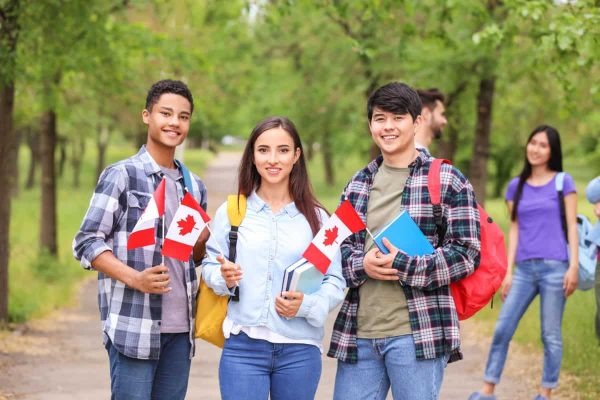


Canada to stabilize growth and decrease number of new international student permits issued to approximately 360,000 for 2024

International students enrich our communities and are a critical part of Canada’s social, cultural and economic fabric. In recent years, the integrity of the international student system has been threatened. Some institutions have significantly increased their intakes to drive revenues, and more students have been arriving in Canada without the proper supports they need to succeed. Rapid increases in the number of international students arriving in Canada also puts pressure on housing, health care and other services. As we work to better protect international students from bad actors and support sustainable population growth in Canada, the government is moving forward with measures to stabilize the number of international students in Canada.

The Honourable Marc Miller, Minister of Immigration, Refugees and Citizenship announced today that the Government of Canada will set an intake cap on international student permit applications to stabilize new growth for a period of two years. For 2024, the cap is expected to result in approximately 360,000 approved study permits, a decrease of 35% from 2023. In the spirit of fairness, individual provincial and territorial caps have been established, weighted by population, which will result in much more significant decreases in provinces where the international student population has seen the most unsustainable growth. Study permit renewals will not be impacted. Those pursuing master’s and doctoral degrees, and elementary and secondary education are not included in the cap. Current study permit holders will not be affected.

IRCC will allocate a portion of the cap to each province and territory, who will then distribute the allocation among their designated learning institutions. To implement the cap, as of January 22, 2024, every study permit application submitted to IRCC will also require an attestation letter from a province or territory. Provinces and territories are expected to establish a process for issuing attestation letters to students by no later than March 31, 2024.

These temporary measures will be in place for two years, and the number of new study permit applications that will be accepted in 2025 will be re-assessed at the end of this year. During this period, the Government of Canada will continue to work with provinces and territories, designated learning institutions and national education stakeholders on developing a sustainable path forward for international students, including finalizing a recognized institution framework, determining long-term sustainable levels of international students and ensuring post-secondary institutions are able to provide adequate levels of student housing.

In order to better align the Post-Graduation Work Permit Program, we are changing the eligibility criteria:

  • Starting September 1, 2024, international students who begin a study program that is part of a curriculum licensing arrangement will no longer be eligible for a post­graduation work permit upon graduation. Under curriculum licensing agreements, students physically attend a private college that has been licensed to deliver the curriculum of an associated public college. These programs have seen significant growth in attracting international students in recent years, though they have less oversight than public colleges and they act as a loophole with regards to post-graduation work permit eligibility.
  • Graduates of master’s degree programs will soon be eligible to apply for a 3-year work permit. Under current criteria, the length of a post­graduation work permit is based solely on the length of an individual’s study program, hindering master’s graduates by limiting the amount of time they have to gain work experience and potentially transition to permanent residence.

In the weeks ahead, open work permits will only be available to spouses of international students in master’s and doctoral programs. The spouses of international students in other levels of study, including undergraduate and college programs, will no longer be eligible.

The important measures announced today complement other recently announced reforms to the International Student Program. Taken together, they aim to ensure genuine students receive the support they require and have the resources they need for an enriching study experience in Canada, while at the same time stabilizing the overall number of students arriving and alleviating pressures on housing, health care and other services in Canada.


“International students are vital to Canada and enrich our communities. As such, we have an obligation to ensure that they have access to the resources they need for an enriching academic experience. In Canada, today, this isn’t always the case. Today, we are announcing additional measures to protect a system that has become so lucrative that it has opened a path for its abuse. Enough is enough. Through the decisive measures announced today, we are striking the right balance for Canada and ensuring the integrity of our immigration system while setting students up for the success they hope for.”

– The Honourable Marc Miller, Minister of Immigration, Refugees and Citizenship

Quick facts

  • In the coming months, we will continue to work to provide clear pathways to permanent residence for students with in-demand skills and explore new measures to better transition international students to the labour force.
  • The department has introduced several measures recently to make sure the International Student Program works for in-coming students, as well as the country as a whole, including:
    • On January 1, 2024, the cost-of-living requirement for study permit applicants was updated to better reflect the true cost of living in Canada and help prevent student vulnerability and exploitation.
    • Since December 1, 2023, post-secondary designated learning institutions have been required to confirm every letter of acceptance submitted by an applicant outside Canada directly with IRCC. This enhanced verification process protects prospective students from fraud and ensures that study permits are issued based only on genuine letters of acceptance.
    • In 2024, we intend to implement targeted pilots aimed at helping underrepresented cohorts of international students pursue their studies in Canada.